
Occupied Palestinian Territory
HI provides humanitarian aid to the most vulnerable populations in the West Bank and the Gaza Strip, in a particularly volatile environment.
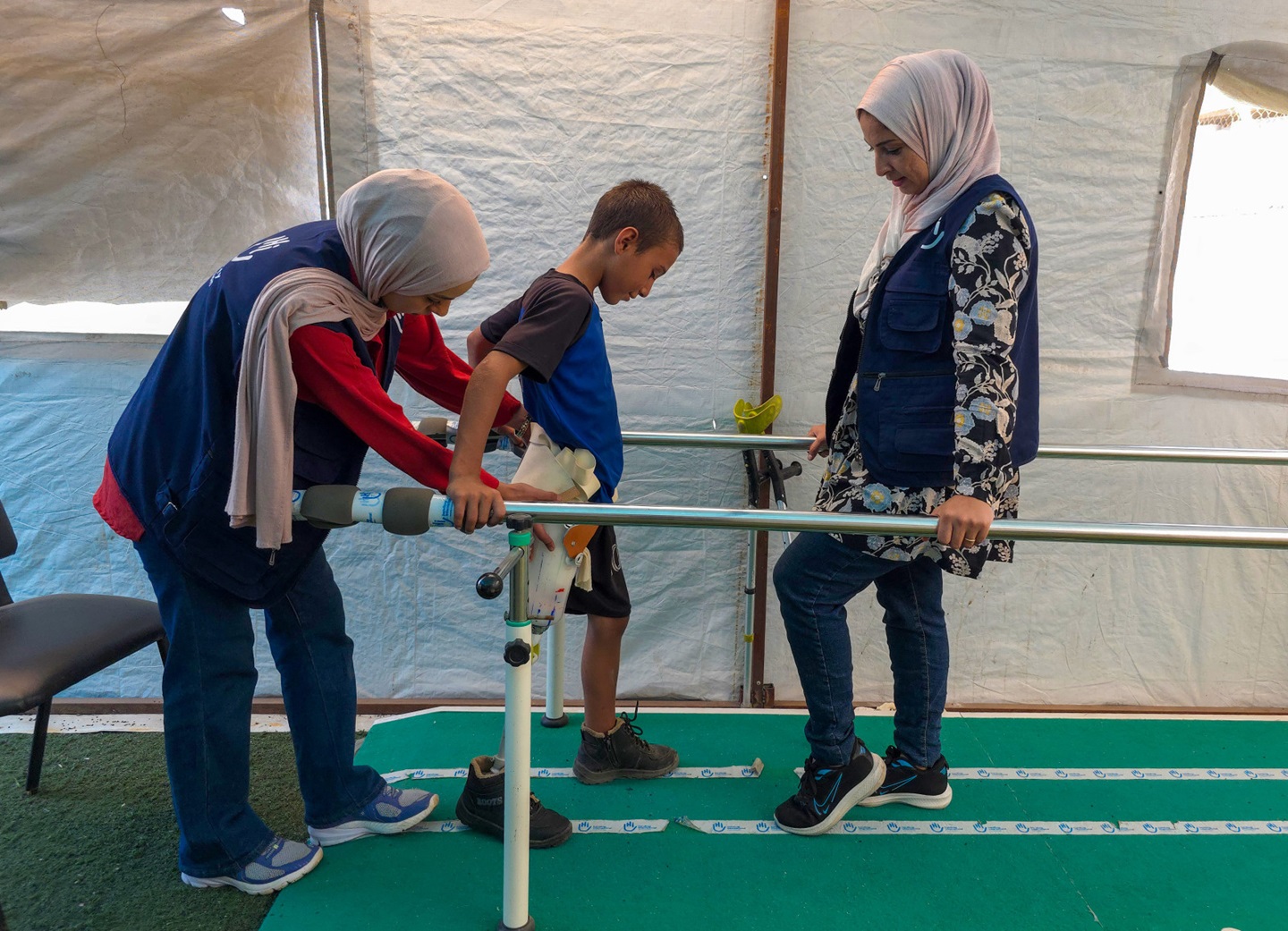
Mohammed Sameer Musleh had his leg amputated after being hit by a tank shell. Here, he is with an HI prosthetist during a session to learn how to walk with his new prosthesis. | HI
Actions in process
HI has been working in the Occupied Palestinian Territory since 1996. Initially, the organisation supported local groups helping people with disabilities. In 1999, it launched a new programme to educate people about the dangers posed by landmines and other unexploded ordnance. Programmes were implemented in partnership with local stakeholders. HI has also responded to successive crises in Palestine and Israel, particularly in the 2000s.
Following the escalation of the conflict on 7 October 2023, HI has scaled up its emergency response in Gaza. HI's response is structured around four main sectors: Rehabilitation and prosthetics and orthotics, with associated psychosocial support; explosive ordnance risk education and contamination assessment; support for children through recreational activities; inclusive education during emergencies.
Atlas Logistique — the operational logistics unit of HI — runs several logistics platforms to ensure the storage and channelling of humanitarian goods and items for humanitarian organisations operating in Gaza.
In January 2025, HI also opened two prosthetics and orthotics centres in the Gaza Strip to produce and deliver prosthetic limbs for amputees.
In parallel, HI delivers explosive ordnance risk education sessions. The organisation also conducted assessments of contamination by explosive ordnance to support the needed clearance efforts.
Particularly crucial in an environment marked by displacements of population, HI has deployed outreach teams accessing beneficiaries directly within their camps and providing daily rehabilitation sessions and psychosocial support.
Areas of intervention


concretely
Situation of the country
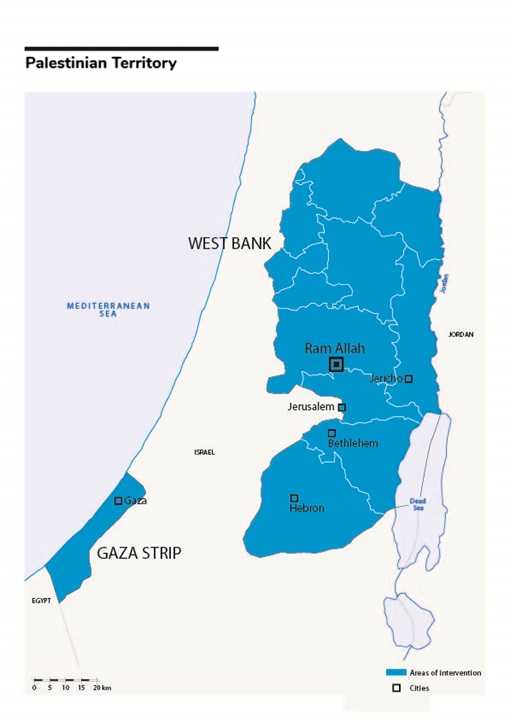
The Palestinian people have endured decades of extraordinarily difficult living conditions due to the ongoing conflict between Israel and the Gaza de facto authorities, and the long-standing occupation of the Gaza Strip. Those in the West Bank are also becoming increasingly vulnerable in the face of an increasingly dire socio-economic situation. A lack of employment opportunities, restrictions on the movement of goods and people, and public services that are heavily overstretched and incapable of meeting demand leave many Palestinians struggling to meet their most basic needs.
The 7 October 2023 attacks in Israel, which caused the deaths of around 1,200 people, triggered large-scale airstrikes and ground operations between the Israeli Armed Forces and Palestinian armed factions, which have devastated the Gaza Strip. At least 72,000 Palestinians have been killed and another 172,000 injured in the Gaza Strip. The conflict has also generated a massive disability crisis, with an estimated 5,000 to 6,000 people becoming amputees in the last 2.5 years alone.
The ceasefire agreement, adopted in October 2025, is reportedly being breached on a daily basis. Despite the ceasefire, over 700 Palestinians are reported to have died and countless more have been injured as a result of continued hostilities. Crossings into Gaza are not operating as announced, with only limited supplies permitted to enter the Gaza Strip. This has caused fuel shortages and price increases, resulting in greater reliance on humanitarian assistance. For instance, HI has not been prevented from delivering essential humanitarian aid since February 2025. Only a few hospitals remain capable of providing care.
Violence has also surged in the West Bank. Between 7 October 2023 and 15 March 2026, over 1,000 Palestinians were killed in the occupied West Bank, including East Jerusalem, and over 30,000 were displaced by ongoing military operations and escalating settler violence.
- Number of HI staff members: 140
- Date the programme opened: 1996