

Yeti at the orthosis and prosthesis centre at the Raqqa hospital | © Tom Nicholson / HI
Yeti Niraula is working in North Syria since January 2023 based in Raqqa as a Senior Prosthetics and Orthotics Technical Officer.
Day 1
 Today, 1st July 2026, I went to Raqqa National Hospital (RNH) in the center of Raqqa city. As usual, I met my team and got updates on the work they would be doing for the day. Today was a very busy day, as I was able to meet eight beneficiaries who were in different phases of service provision — some were receiving their training, some had finished training and were ready to be prepared for final delivery, and some were in the assessment phase.
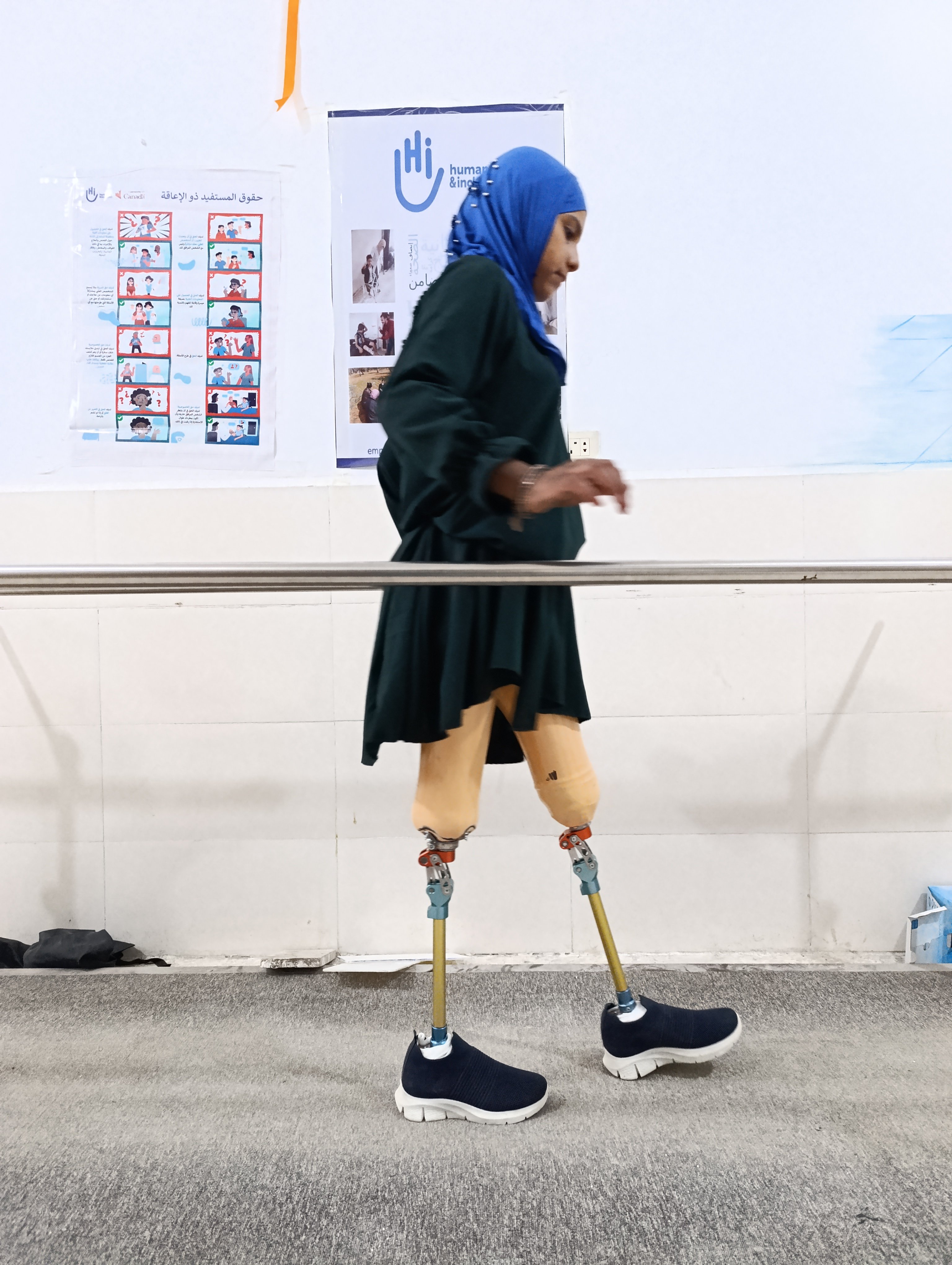
There was Sida, a 12-year-old girl, who had undergone amputation of both lower limbs at the knee, due to an airstrike in 2016. She is from Deir ez-Zor, and a year and a half ago, she was fitted with a pair of short prostheses, called stubbies.
Caption: Sida at the Raqqa National Hospital during the first trial of her protheses © HI
This time, she was fitted with long prostheses with improved knee joints, bringing her close to her actual height. After a week of training sessions, today a final gait session was completed, and she was finally able to walk tall, using both the knee joints and a more natural gait. It was wonderful to see her so bright and happy. I asked her, "Are you happy?" and she replied, "Yes." It was such a great moment. 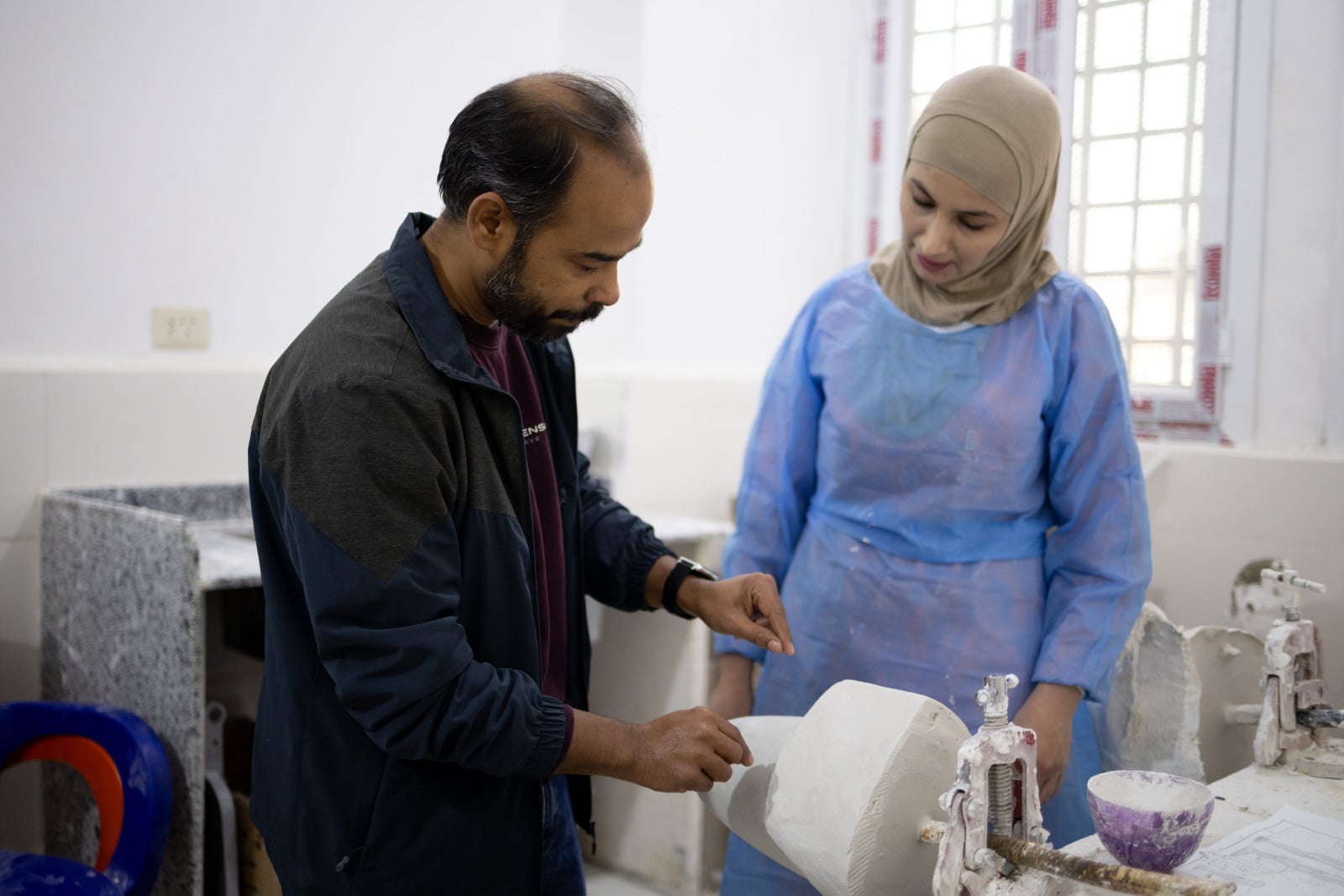
Captions: Yeti team with a member of the P&O team at the Raqqa National Hospital © Tom Nicholson / HI
Day 2
Today, we delivered a prosthesis to Nazah, a 16-year-old girl who was born with a deficiency in both legs, which looks similar to an amputation done to remove the entire foot. After a couple of days of training, today she received her prosthesis and was walking so well that the happiness was reflected in her eyes. Nobody could guess that she would be wearing artificial limbs. This was possible through many follow-ups conducted by the HI team, such as changing the alignment of the foot and managing the pressure and pain she encountered during walking training.
The lack of technology has a big impact: for Nazah, we used a prosthesis with a wooden block that is shaped to fit the socket and connect to the foot with glue. Getting the exact alignment is challenging. In the end, we delivered the prosthesis with a very good walking outcome for her.
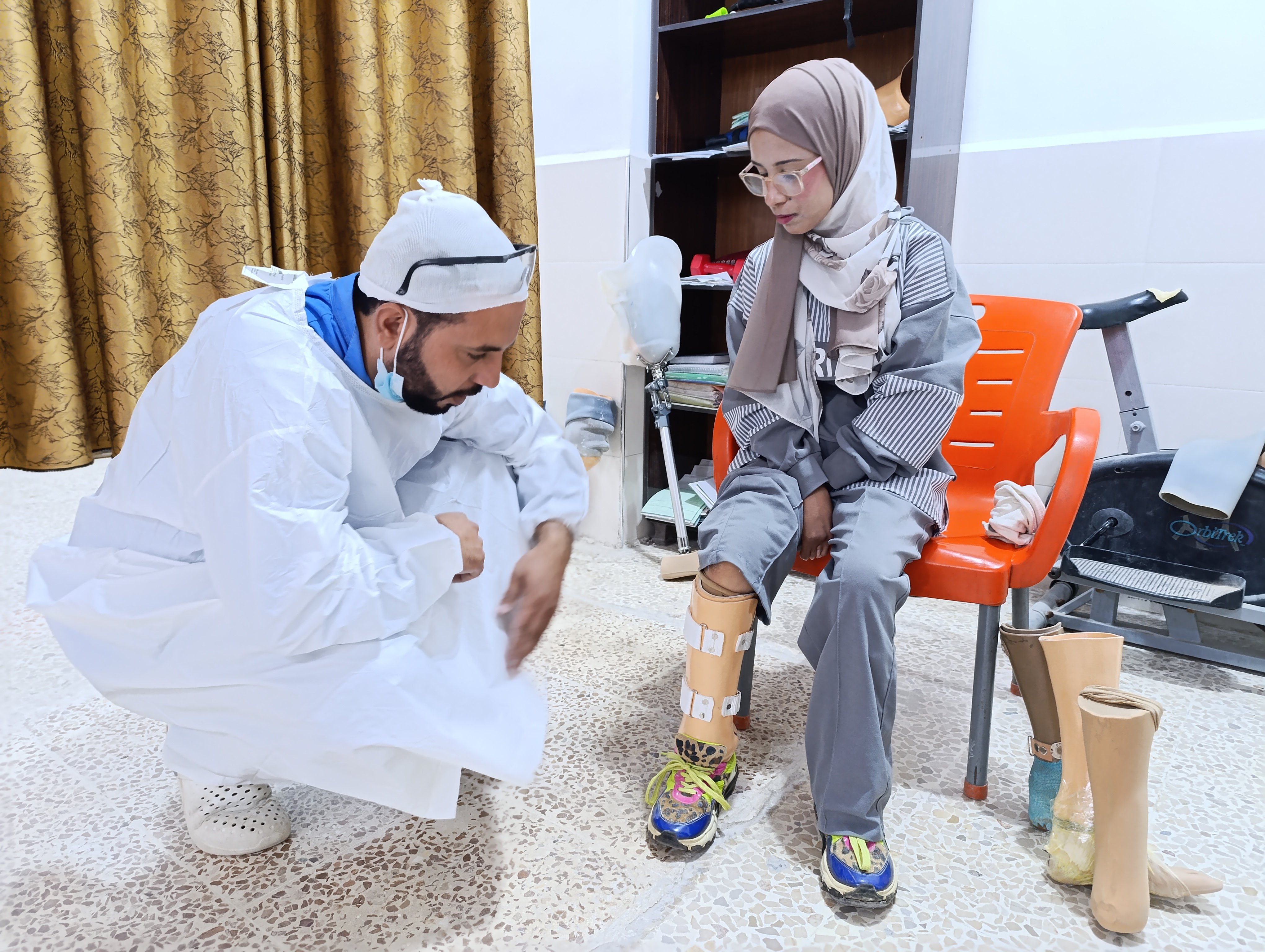
Captions: Nazah with a prosthetist from the Raqqa hospital © HI
Day 3
Another case started with walking training with a male patient. Before walking, there were sessions for weight bearing so that his limb would be adapting the prosthesis. However, the first session was a little difficult for him due to his scars at the bottom of the stump attached to bone. There were a small blister and some pain, and we had to stop the training for today. This is one of the significant challenges: Beneficiaries with complicated stump need to go having patience and enduring the discomfort is key. In the meantime, people come with expectations how quickly they would be able to walk... Plus, he's from far distance, Kobani, which is another major barrier for such people, affecting access to the services, causing additional travel expenditures and additional time.
Sometimes I think how nice it would be if there would be accommodation facility within the hospital for such people so that they would complete the training on time. Many trainings needed to be cut short due to such issues.
Day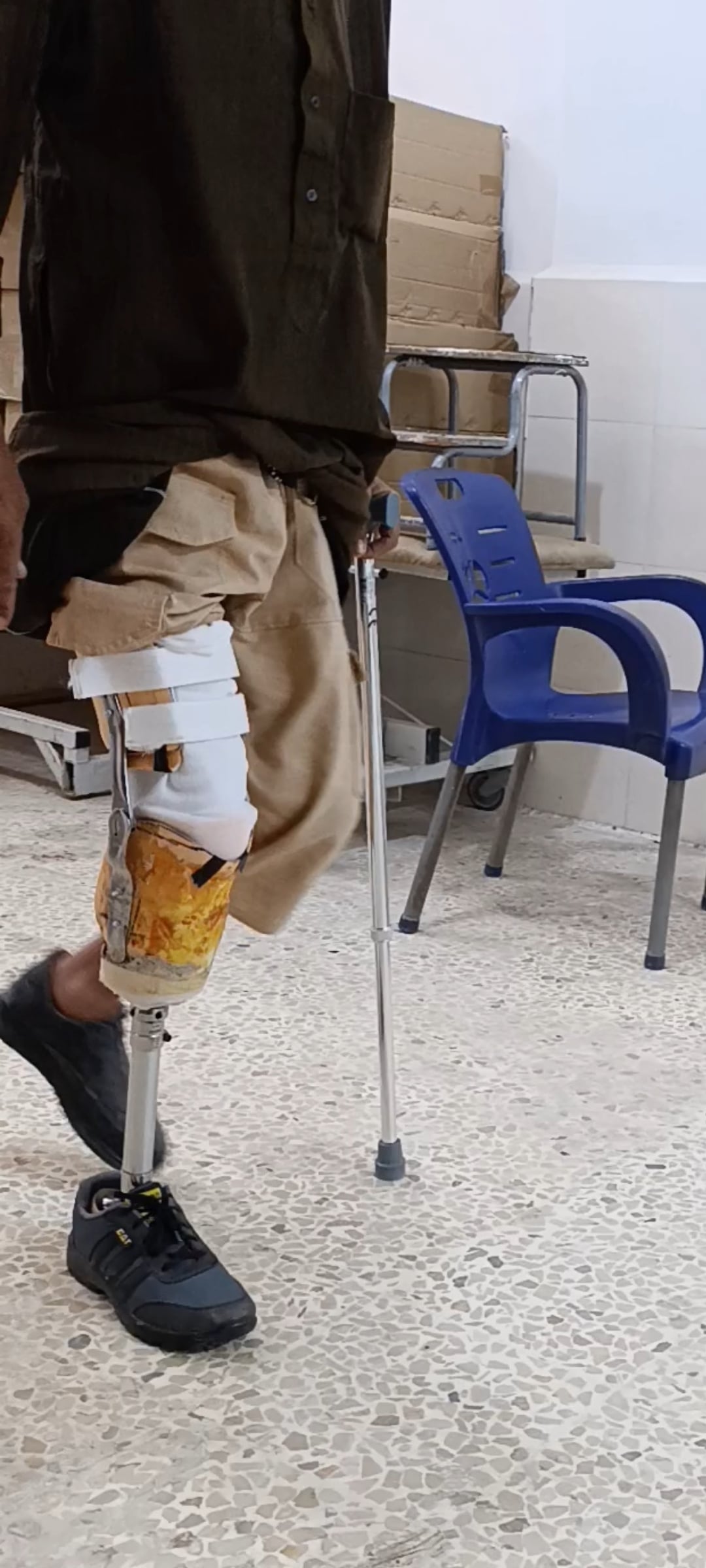 4
4
Today, I had two beneficiaries scheduled for walking training, both with below-knee amputations, and both with complicated stump conditions: a significant degree of bending, scars attached to the underlying bone, and very small residual limbs. This situation posed a significant challenge in fitting the prosthesis. We designed a prosthesis aligned with external joints and bars so that it would get support from the thigh section, giving the prosthesis stability.
One of them is a 65-year-old man who has been receiving walking training for two weeks. I remember when we took his measurements, we told him about his complications and also asked about his expectations. He said he wanted to be able to move around the house. We said we would try our best, as the condition presented some challenges. Today, after two weeks, he is able to walk with the help of one walking stick and has shown some progress in stability. Despite several challenges such as pressure, blisters, and pain, he persevered and is now able to walk, at least on a smooth surface. We are planning to deliver his permanent prosthesis to him next week.
Captions: A 65-year-old patient with a below-the-knee amputation © HI
Day 5
26th July 2026. Same patient as yesterday. He is experiencing further looseness in the socket due to shrinkage in his residual limb volume, and one more layer of cotton stump sock was added. We decided to recast his socket before delivering the final prosthesis. This is one of the common challenges for first-time users, which lengthens the prosthetic fitting duration and adds to the out-of-pocket expenditures — be it travel, accommodation, or any other personal cost incurred by the beneficiaries during the treatment sessions.
Day 6
One beneficiary came at the centre. He received prosthesis from rehabilitation unit in 2019. After many years, he visited the centre for getting his prosthesis repaired, and told us that he was not using it as he had severe pain on the stump. Conducting a very quick assessment, it was noted that the response on palpation of the stump didn't match with his statements, despite of saying 80 to 90% pain score, the facial expressions were not very convincing. We continue with some sessions on pain management. But the pain could be psychological.
Day 7
It's already the end of the week. This week we worked with about twenty people with different needs, and we did everything we could to help them as best we could. On the weekend, I have time to myself, but I have to follow certain rules for my own safety.
Out of work in Raqqa, I mostly spend my time in the guest house chatting with colleagues, cooking food, watching podcasts and most importantly connecting with my family. The walking restrictions are high here, though they have loosened recently due to a change in context. I remember the days when there used to be the situation when to go office from the guest house, which was about 2 minute by walk, office cars would be used.
During weekdays, I spend most of my time with work colleagues, especially the rehabilitation team, and interestingly, my team has even given me an Arabic name, "Abu Dua." Sometimes on weekends, I visit a nearby place called "Jabar Castle" with other colleagues; it's beside Tabqa Lake and a great place to go, especially in summer. Since there isn't much to do in Raqqa, the walking restrictions have a significant impact, especially on health and stress levels. Still, I'm able to manage it with the support of wonderful colleagues and my family.