
Cuba
In Cuba, HI works in community resilience and disaster risk reduction, promoting the active participation of people with disabilities in society.
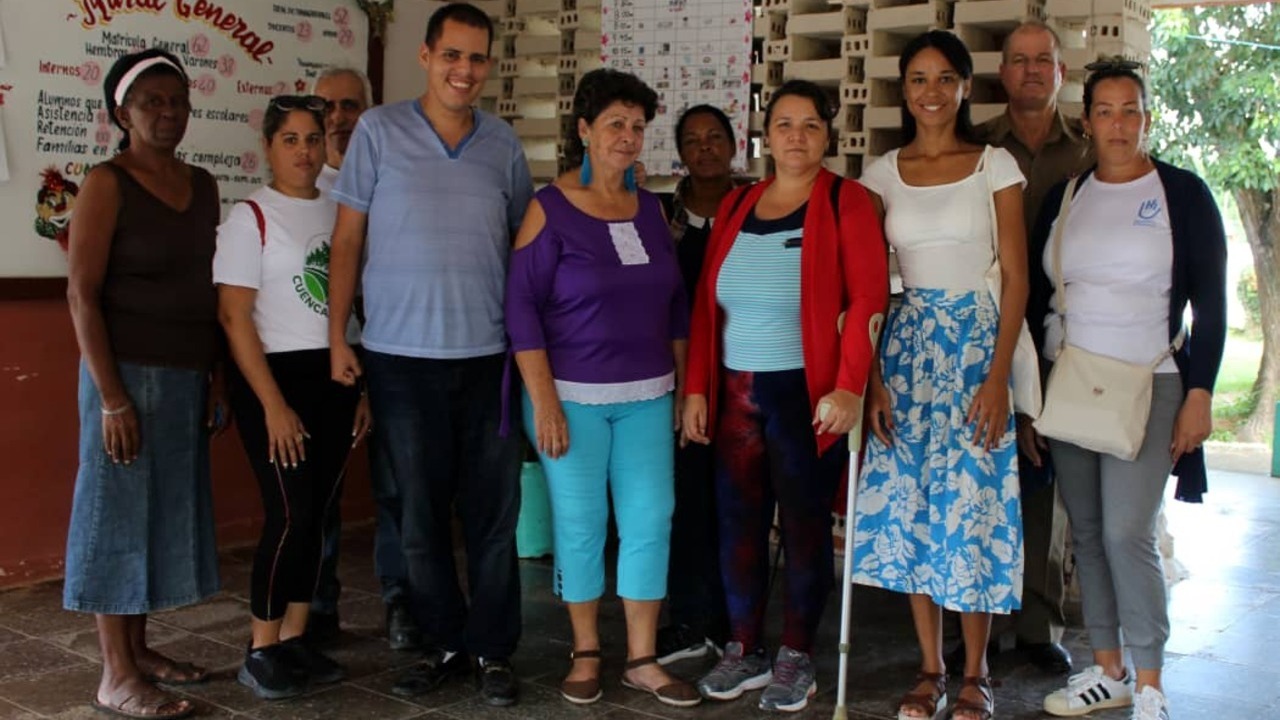
People supported as part of an inclusion project in Cuba. | © HI
Actions in process
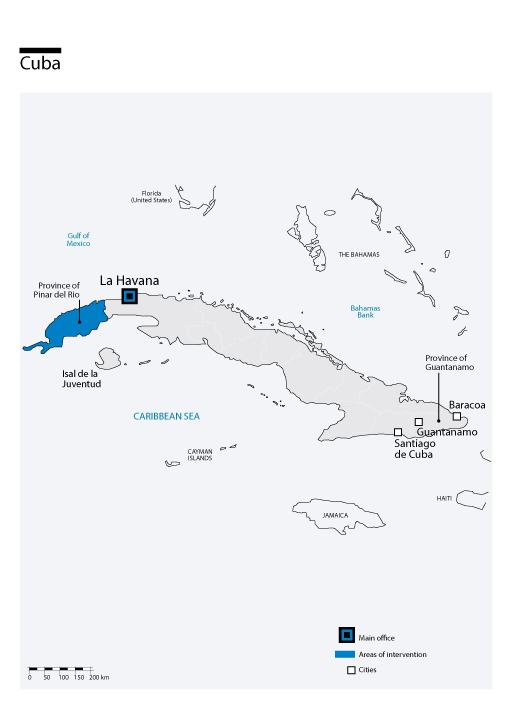
Cuba faces a current humanitarian situation as well as a high risk of disasters, particularly during the hurricane season, which runs from June to December each year. To help vulnerable communities to face and be prepared for these events, HI works with local authorities and civil society organisations on disaster risk reduction and the development of resilience strategies in the provinces of Pinar del Río and Artemisia. The organisation supports inclusive health services and the development of local partners’ knowledge of risks and their capacity for anticipation and prevention, ensuring that people with disabilities are included in the responses provided. Drawing on their experience and expertise, they in turn help to make disaster preparedness plans more effective.
Furthermore, HI is implementing a project to support communities in the wake of Hurricane Ian, which severely affected the island in 2022. In three municipalities, HI is supporting community initiatives that enable residents to restore and sustain their livelihoods. The organisation is therefore supporting the development of urban community and family gardens to strengthen residents’ food sovereignty. In addition, HI is assisting three schools with disaster risk preparedness and providing training and awareness-raising for teaching staff.
HI is also promoting inclusion in the country by supporting people with disabilities and their caregivers. To this end, the organisation is improving access to quality healthcare services and fostering economic inclusion by developing employment opportunities. HI also provides adapted equipment and assistive devices (walking sticks, wheelchairs, medical beds, etc.) and offers psychosocial support to those in need. HI promotes sport for people with disabilities and women, as part of a drive for equality and social inclusion.
HI encourages capacity-building for people with disabilities, particularly young people and women in rural areas. The organisation supports their skills development to promote their participation in socio-economic life and decision-making bodies. To this end, HI works with government ministries, organisations for people with disabilities and Cuban civil society associations.
- Number of HI staff: 1 person
- Number of direct beneficiaries supported by HI in 2025: 44,912 people
- Number of indirect beneficiaries supported by HI in 2025: 9,098 people
- Programme launch date: 1998
Areas of intervention


concretely
Situation of the country
Cuba, a Caribbean island with a population of around 11 million, has been experiencing a deep socio-economic and humanitarian crisis for several years, marked by shortages, persistent inflation and major structural challenges. More than 2 million people in the country are in need of humanitarian aid, with urgent needs in terms of access to food, healthcare and energy.
The Republic of Cuba developed as a socialist state following the revolution in 1959. After the collapse of the Soviet Union in the early 1990s, the country—whose economy had been closely tied to the USSR—entered a long period of economic challenges, which culminated in the gradual diversification of the national economy. Nevertheless, in 2026, the socio-economic situation remains tense: after two years of economic contraction, growth is struggling to regain momentum, held back by the energy crisis, the tightening of US sanctions reinforced in 2026, the collapse of tourism and monetary instability. Power cuts, which can last up to 20 hours a day, and shortages of basic goods (food, medicines) have led to a rise in poverty and inequality.
Humanitarian crises are worsening: disasters (hurricanes, floods) and the deterioration of health and education infrastructure are exacerbating precarious living conditions. For instance, Cyclone Melissa in 2025 affected 3 million people, causing massive flooding, destruction of infrastructure and population displacement. Health, water and electricity systems were severely disrupted, exposing the most vulnerable populations – particularly children, older people and people with disabilities – to increased risks of disease and malnutrition. According to the UN, thousands of people, particularly children and older people, are suffering from malnutrition and a lack of access to healthcare.
In this context, people with disabilities face additional barriers to accessing essential services, despite the Cuban government’s efforts to promote their inclusion.
- Population: 10.9 million
- HDI: 0.762 (2023)
- GDP: USD 107.35 billion (2024)
- GDP per capita: ~9,605 USD (2024)