
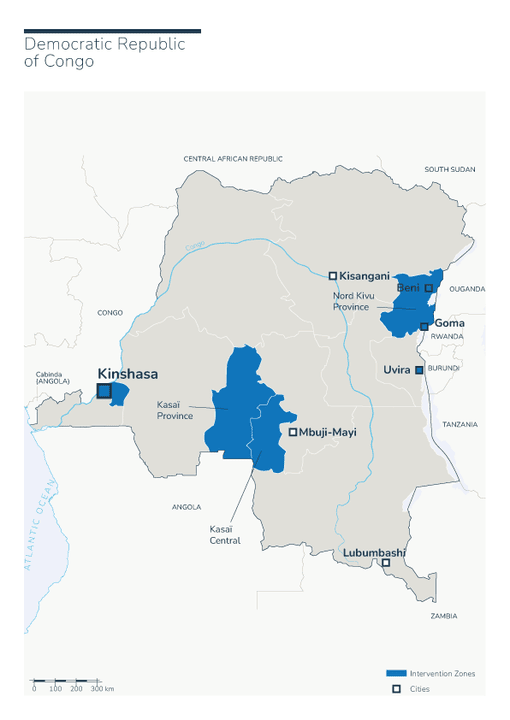
Democratic Republic of Congo
In the Democratic Republic of Congo, HI supports people affected by humanitarian crises or poverty by facilitating their access to essential services – health, education and protection.
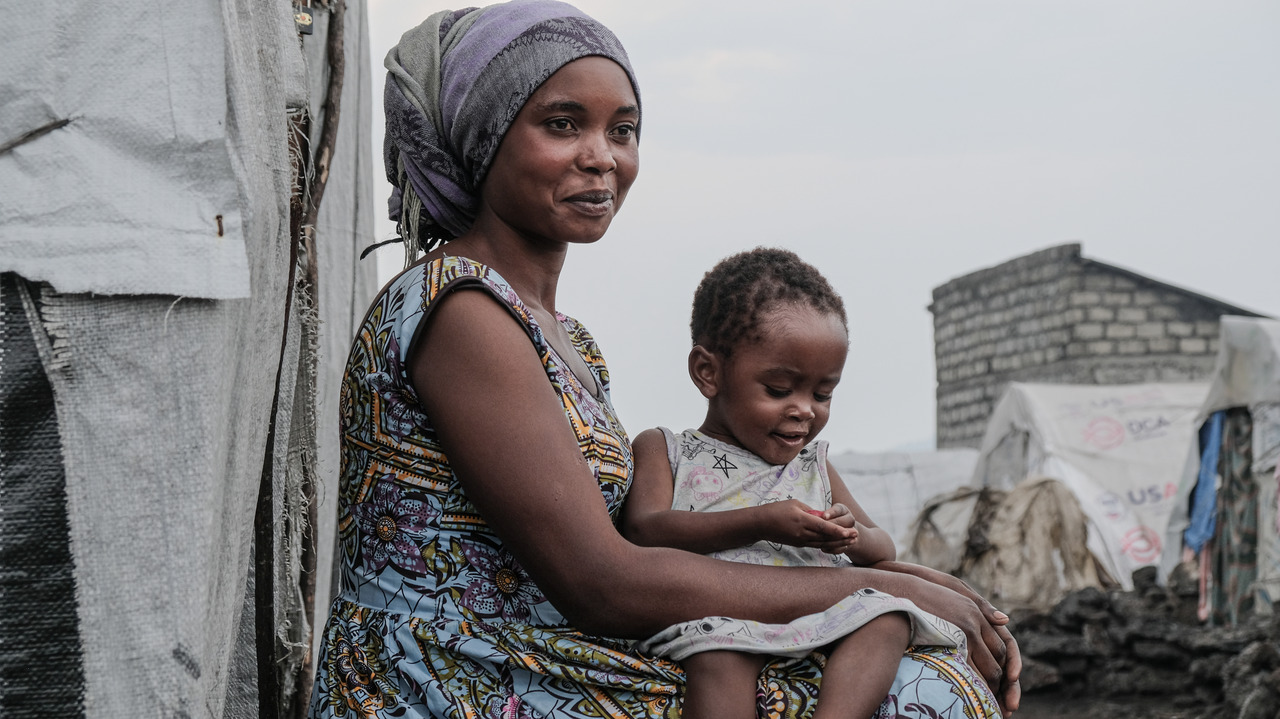
Amani and her daughter Inaya have fled the violence and are living in the Bulengo camp for displaced persons. | © E. N'Sapu / HI
Actions in process
In eastern DRC, HI provides support to people affected by armed violence and its devastating consequences on communities. The organisation is improving access to healthcare, particularly for people with disabilities and those who have been displaced. To this end, the organisation provides psychological and psychosocial support to people who have experienced traumatic events. HI identifies, advises and supports women and men who have survived gender-based and sexual violence on their journey towards resilience.
HI also works with health centres to improve patients’ access to rehabilitation. The organisation provides prostheses, orthoses and other mobility aids to people with disabilities, thereby enabling them to regain a degree of independence and facilitating their better integration into socio-economic life. To improve epidemic prevention and reduce health risks, HI works to improve access to water and sanitation within communities and in health centres.
HI provides other NGOs with a storage and distribution service for goods, facilitating the transport of aid (medicines, essential items, tools, etc.). This service ensures the logistical continuity that is essential in an unstable environment and significantly increases the number of people who can receive humanitarian aid.
In the west of the DRC, HI continues its work with children aged 0 to 12 and their families. The organisation facilitates their access to healthcare, particularly rehabilitation services, to ensure early intervention that helps prevent developmental delays. HI also supports access to inclusive local social and educational services. By promoting comprehensive support, HI trains carers to provide better care for children and supports the socio-economic integration of parents.
HI improves access to education for children with disabilities, particularly girls with disabilities. The organisation works with communities and education stakeholders to improve school accessibility and provide appropriate support for children. It also facilitates access to healthcare for children, so that they can regain greater independence and study in suitable conditions.
HI also implements vocational training and economic reintegration programmes to support vulnerable populations in accessing sustainable livelihoods. In the east of the country, particularly in Birambizo in North Kivu, these programmes specifically target returnees, displaced persons and other populations affected by crises. In Kinshasa, HI is also developing this type of approach with a greater focus on development and socio-economic inclusion, in partnership with local stakeholders and organisations.
Finally, HI works with other organisations operating in the country to make humanitarian operations more inclusive. This involves, in particular, delivering training on inclusivity for staff from other NGOs.
- Number of HI staff: 137 people
- Number of direct beneficiaries supported by HI in 2025: 474,737 people
- Number of indirect beneficiaries supported by HI in 2025: 668,247 people
- Programme launch date: 1995
Areas of intervention


concretely
Situation of the country
The Democratic Republic of the Congo (DRC) is facing a major humanitarian crisis, marked by persistent socio-economic challenges and multidimensional emergencies. In 2026, nearly 15 million people are in need of humanitarian aid, against a backdrop of escalating violence, mass displacement and food insecurity.
Despite sustained economic growth in recent years (over 6% in 2024), the DRC continues to face structural inequalities and widespread poverty. Violence in the east of the country is weighing particularly heavily on development prospects.
The security situation has deteriorated significantly, particularly in the provinces of North Kivu and Ituri. The resumption of fighting and the capture of strategic towns such as Goma and Bukavu by armed groups in 2025 have exacerbated the situation, forcing hundreds of thousands of people to flee, often in precarious conditions. As a result, by early 2026, the country had 6.47 million internally displaced people, the vast majority of whom came from the eastern provinces (North Kivu, South Kivu and Ituri).
in 2025, more than 830,000 people were affected by heavy rains, which destroyed crops and homes and cut off access to essential services. Violence, disasters and recurring epidemics (measles, cholera, Mpox) have plunged more than 26 million Congolese into acute food insecurity. Children are particularly affected: 4.18 million suffer from acute malnutrition and require urgent care to prevent developmental delays.
In this context, people with disabilities, who are often marginalised, face major obstacles in accessing basic services and humanitarian aid. Their situation remains a cause for concern, with specific needs in terms of protection, health and inclusion that are still not adequately met.
- Population: 110 million
- HDI: 0.522 (2023)
- GDP: USD 70 billion (2024)
- GDP per capita: ~USD 650 (2024)