
Ecuador
In Ecuador, HI is running an inclusive education project to promote access to quality education for all children.

School in Quito, Ecuador. | © J. Maitrias / HI
Actions in process
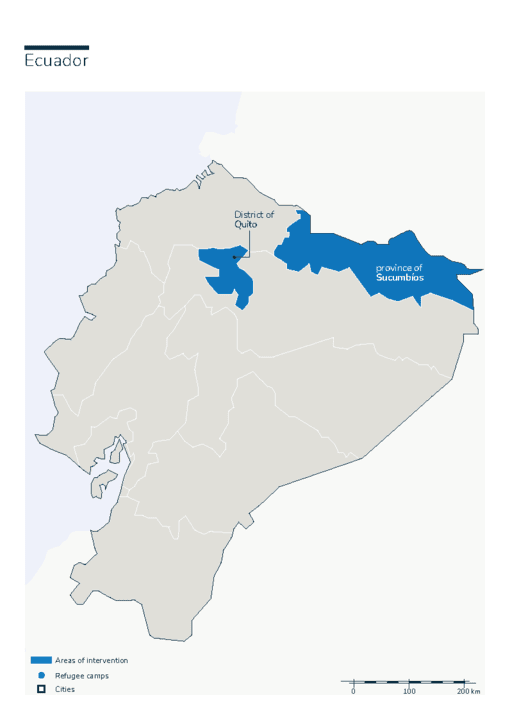
HI is running an inclusive education project in Quito, in partnership with local organisations. This project aims to improve access to education for all through support for pupils, particularly those with disabilities or special educational needs. The organisation runs workshops on various topics such as art, nature and music, as well as training sessions for teachers and members of teaching staff. Awareness-raising sessions on the rights of people with disabilities are also organised for parents and families, alongside information campaigns for community members to promote the inclusion of students with disabilities.
As part of this project, HI works with its partners to strengthen civil society organisations and promote the rights of children and adolescents. The aim is to influence public policy and build on the good practices tested within the project to replicate them on a larger scale.
In response to rising levels of violence, HI is implementing a protection programme with a focus on gender, age and diversity in the province of Sucumbíos, in the north-east of the country. HI offers an inclusive humanitarian response through the implementation of inclusive case management, tailored to the individual needs of people with disabilities and their families, and including counselling, psychosocial support, cash transfers and the direct provision of supplies where necessary. HI ensures the strengthening of local capacities.
- Number of HI staff: 6 people
- Number of direct beneficiaries supported by HI in 2025: 3,916 people
- Number of indirect beneficiaries supported by HI in 2025: 9,926people
- Programme launch date: 1986
Areas of intervention


concretely
Situation of the country
Ecuador, a South American country with a population of nearly 18 million, faces major humanitarian and socio-economic challenges. In recent years, the country has experienced uneven economic growth and, despite some progress in poverty reduction over the past decade, large sections of the population remain vulnerable, particularly in rural areas and among indigenous communities.
The security situation in the country has deteriorated significantly in recent years due to violence linked to drug trafficking and organised crime. The country is experiencing a marked rise in homicides and violence, which is directly affecting people’s living conditions. These developments are exacerbating needs in protection, particularly for the most vulnerable populations.
Ecuador remains a major host country for refugees and migrants, particularly people from Venezuela, with several hundred thousand people currently residing on its territory. Many live in precarious conditions, with limited access to employment, healthcare and education. Humanitarian needs relate to food security, protection and access to basic services. Children and women are particularly vulnerable to violence, whilst people with disabilities face barriers to accessing essential services and assistance due to a lack of sufficient inclusive mechanisms.
People with disabilities, who are often excluded from emergency response mechanisms, face increased risks of marginalisation and violence. Their access to healthcare, education and rehabilitation services remains limited, despite Ecuador’s international commitments to inclusion.
The country is also highly vulnerable to climate-related hazards. In 2024, a historic drought, accompanied by wildfires and power shortages, affected thousands of people. Disasters combined with the effects of the El Niño phenomenon, are exacerbating food insecurity and internal displacement.
Against this backdrop, humanitarian needs remain significant, particularly in terms of protection, assistance to migrants, food security and access to basic services.
- Population: 18.1 million
- HDI: 0.777 (2023)
- GDP: USD 124.68 billion (2024)
- GDP per capita: ~USD 6,800 (2024)