
Haiti
Against the backdrop of a prolonged multi-sectoral crisis in Haiti, HI is implementing an inclusive health and rehabilitation response, complemented by a response to basic needs to ensure that the most vulnerable populations have access to essential services.
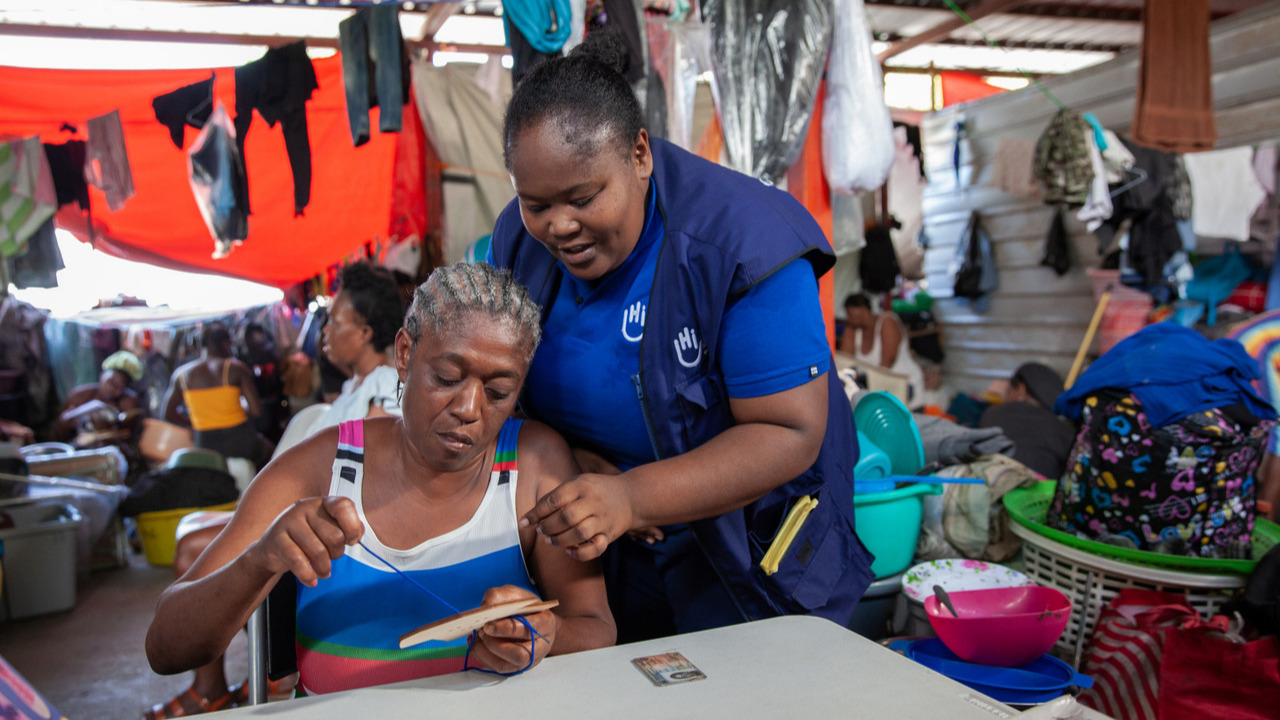
Gaëlle Charles, HI occupational therapist, performs exercises with Merena Eline to improve the mobility of her hand. | © T. Noreille / HI
Actions in process
Present in Haiti since 2008, HI has gradually developed an approach combining rehabilitation, health, inclusion and humanitarian response. With a long-standing commitment to strengthening the physical and functional rehabilitation sector, the organisation continues this support today by building the capacity of healthcare facilities and transferring skills to national professionals, thereby contributing to a sustainable improvement in healthcare provision and the recognition of rehabilitation professions.
Since 2021, in response to the worsening security, humanitarian and health crisis, HI has strengthened its position as a key player in the inclusive emergency response. The organisation works as closely as possible with affected populations, particularly internally displaced people and host communities, by facilitating access to essential physical and mental health and protection services. Through mobile teams, HI provides rehabilitation services (physiotherapy, occupational therapy) combined with psychosocial support sessions, as well as technical aids for mobility (canes, crutches, wheelchairs, etc.) and the distribution of dignity kits. The organisation also refers people to specialist services, particularly in primary healthcare and for survivors of violence.
Inclusive humanitarian action and inclusive governance are cross-cutting approaches integrated into all of HI’s interventions. As such, the organisation provides technical support to humanitarian actors, authorities and local partners to promote the systematic integration of disability, age and gender into the national response. This support includes training and capacity-building activities, conducting accessibility assessments, adapting response mechanisms (infrastructure, services, tools), as well as supporting organisations of people with disabilities to strengthen their participation in coordination and decision-making mechanisms.
In this context, HI also implements water, hygiene and sanitation interventions as part of a vital emergency response that goes beyond the mere response to cholera (access to drinking water and water for domestic use, rehabilitation of water and sanitation infrastructure, support for waste management, promotion of good hygiene practices and distribution of hygiene kits…).
Across all its interventions, HI combines emergency response, capacity building and development to ensure the continuity and sustainability of its work in the context of protracted crises.
- Number of HI staff: 85 people
- Number of direct beneficiaries supported by HI in 2025: 183,694 people
- Number of indirect beneficiaries supported by HI in 2025: 792,557 people
- Programme launch date: 2008
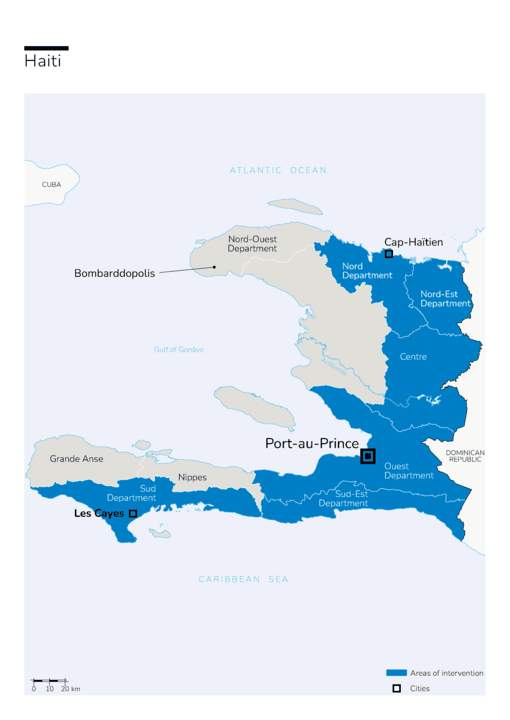
Areas of intervention


concretely
Situation of the country
For several decades, Haiti has been experiencing a political, economic, social, security and humanitarian crisis, marked by a rapid deterioration in the living conditions of its population. Since the assassination of the President of the Republic in July 2021, the situation has deteriorated significantly, with more than 6.4 million Haitians – over half the population – in need of emergency humanitarian aid.
Following years of political instability in the country, a recent agreement has paved the way for parliamentary and presidential elections scheduled for August 2026. However, the holding of these elections will depend on the restoration of security and institutional stability, which remain fragile. Indeed, the socio-economic context of the past few years remains deeply marked by political instability, the collapse of essential services and an economy paralysed by widespread violence. Organised criminal groups now exercise almost total control over the capital, Port-au-Prince, and are gradually extending their influence into the provinces, committing abuses, kidnappings, sexual violence and murders against the population.
The humanitarian situation is extremely alarming: 5.9 million people are suffering from acute food insecurity, including nearly 2 million in an emergency phase. Furthermore, forced internal displacement has more than doubled in a year, reaching 1.4 million people – around 12% of the population – the vast majority of whom are living in precarious conditions with limited access to food, water and healthcare. Children are particularly affected: one in two internally displaced persons is a child, and more than 2.8 million of them are in need of humanitarian aid.
Epidemics, disasters and the collapse of the healthcare system – with less than a third of healthcare facilities fully operational nationwide – are exacerbating the vulnerability of populations, particularly children, women and people with disabilities. The latter are particularly at risk of marginalisation and exclusion, with very limited access to basic services and employment.
Furthermore, due to its geographical location, Haiti is highly vulnerable to natural hazards. In recent years, the country has been hit by numerous hurricanes, floods and earthquakes. These disasters have severe consequences for the population, as highlighted by the devastating passage of Hurricane Melissa in October 2025, which affected nearly 3 million people in the Caribbean, a significant proportion of whom were in Haiti.
- Population: 11.9 million
- HDI: 0.554 (2023)
- GDP: USD 25.22 billion (2024)
- GDP per capita: ~USD 2,142 (2024)