

Jordan
In Jordan, HI supports people affected by humanitarian crises.
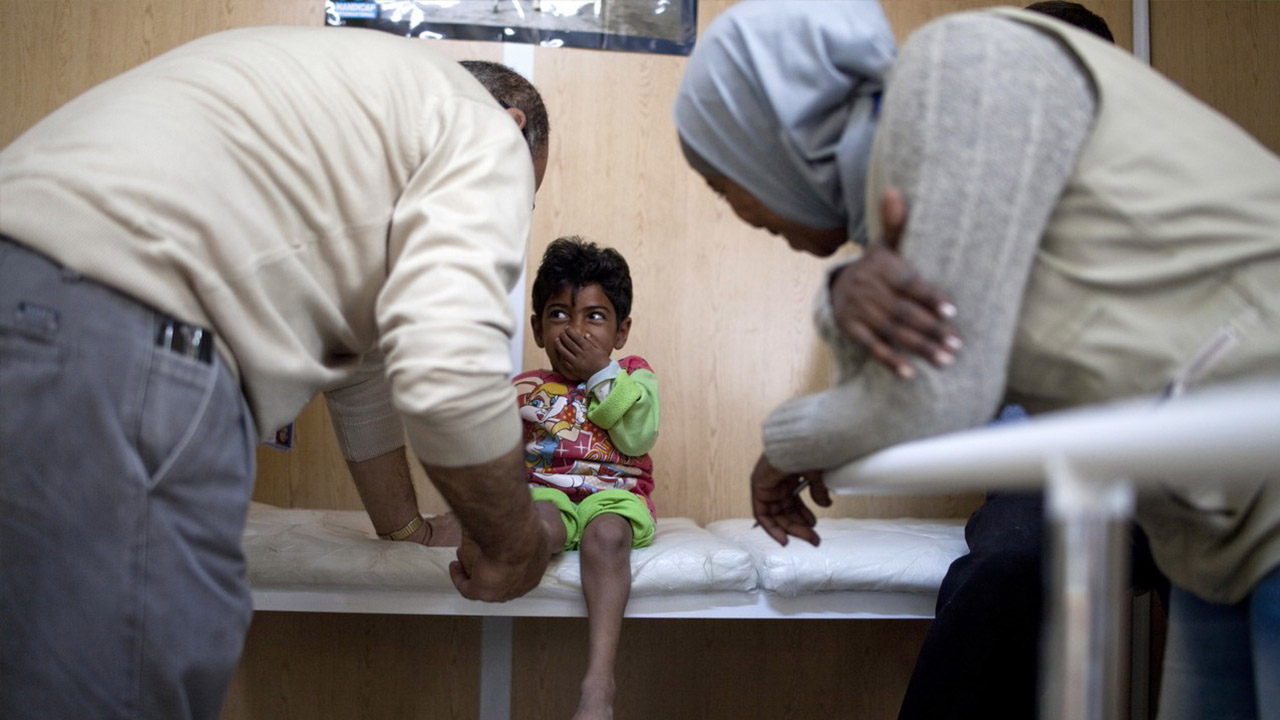
Rehabilitation session in a cntre supported by HI | © Dan Giannopoulos / Handicap International
Actions in process
HI provides technical support and training for healthcare staff, as well as logistical support through assistive devices on rehabilitation. The organization also works with the Ministry of Health to implement the National Rehabilitation Strategy.
HI supports the early detection of developmental delays and disabilities and provides early intervention services for identified children. It supports the integration of children with disabilities into inclusive schools, preparing the school environment and teachers. HI also works with Jordan authorities develop a national referral system for services related to persons with disabilities.
HI provide people with disabilities with training and support to integrate into the labour market. It includes workplace adaptation and training employers on inclusive practices and the fundamentals of inclusion.
Areas of intervention


concretely
Situation of the country

Jordan remains one of the most stable country in the Middle East, yet its humanitarian landscape is currently shifting due to regional geopolitical changes and a burgeoning domestic economic crisis.
While Jordan’s Human Development Index (HDI) remains high, the gap between the urban elite in Amman and those in rural governorates like Mafraq or Ma’an is widening.
There are still approximately 400,000 registered Syrian refugees. This number has begun to decline following the political transition in Syria in late 2025, which sparked a wave of voluntary returns. Since December 2024, over 185,000 Syrians have voluntarily returned home from Jordan. However, many remain because of destroyed infrastructure and lack of services in Syria.
About 80% of refugees live in urban areas, integrated into Jordanian communities, while the remaining 20% reside in camps like Zaatari and Azraq.
Disability prevalence is estimated between 11% and 15% (roughly 1.1 million people) in Jordan. Those in remote areas face both the physical and economic barriers due to isolation.
- Number of HI staff members: 18
- Programme launch date: 2006