


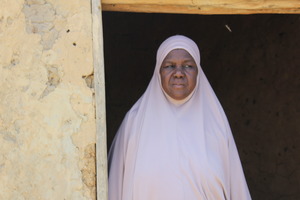
Sayada receives financial aid to buy basic necessities. | © A. M. Anassou Garba / HI
Damage caused by heavy rainfall and flooding
 Sayada, 56, mother to ten children – six boys and four girls, lives in the town of Tillabéry, in western Niger. As in many other parts of West and Central Africa, Niger experienced severe weather conditions this summer. The months of July and August were particularly harrowing for Sayada’s family. On 7 July, torrential rainfall caused considerable damage to homes, including her own.
“The heavy rains came in quick succession, causing a lot of material damage. They caused part of the dyke upstream of our neighbourhood to give way. As a result of the flooding and rising water levels, we lost most of our possessions, including a plot of rice that my family had been cultivating for several years,” Sayada tells us, sadly.
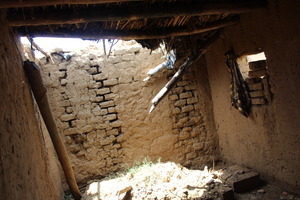
Houses in the old districts of Tillabéry are traditionally built of banco, which are bricks made from sun-dried mudbricks. Unfortunately, banco is not very resistant to the kind of severe weather that is becoming increasingly frequent in the region because of climate change. Sayada's house was among the buildings damaged by the torrential rain: the roof of one of her rooms was destroyed.
Emergency aid for the flood victims
 ‘We were told that a meeting was planned with HI to discuss the situation with households affected by the floods. A big meeting was held in the village school, during which the organisation's teams informed us about the risks caused by the floods and the good practices to adopt in such situations’.
In September 2024, Sayada's household, along with 419 others in Tillabéry, received financial assistance to buy food and cereals, as well as essentials such as water, soap and clothing.
‘We thank you from the bottom of our hearts for your help. But as well as emergency aid, we also need help to rebuild our homes,’ she concludes.
The emergency aid project for the households affected by the floods is being implemented in the Tillabéry region of Niger. Two hundred shelter kits were also distributed between August and September 2024.