
Senegal
In Senegal, HI carries out mine clearance operations and works towards an inclusive, sustainable and equitable society that offers equal opportunities to everyone.
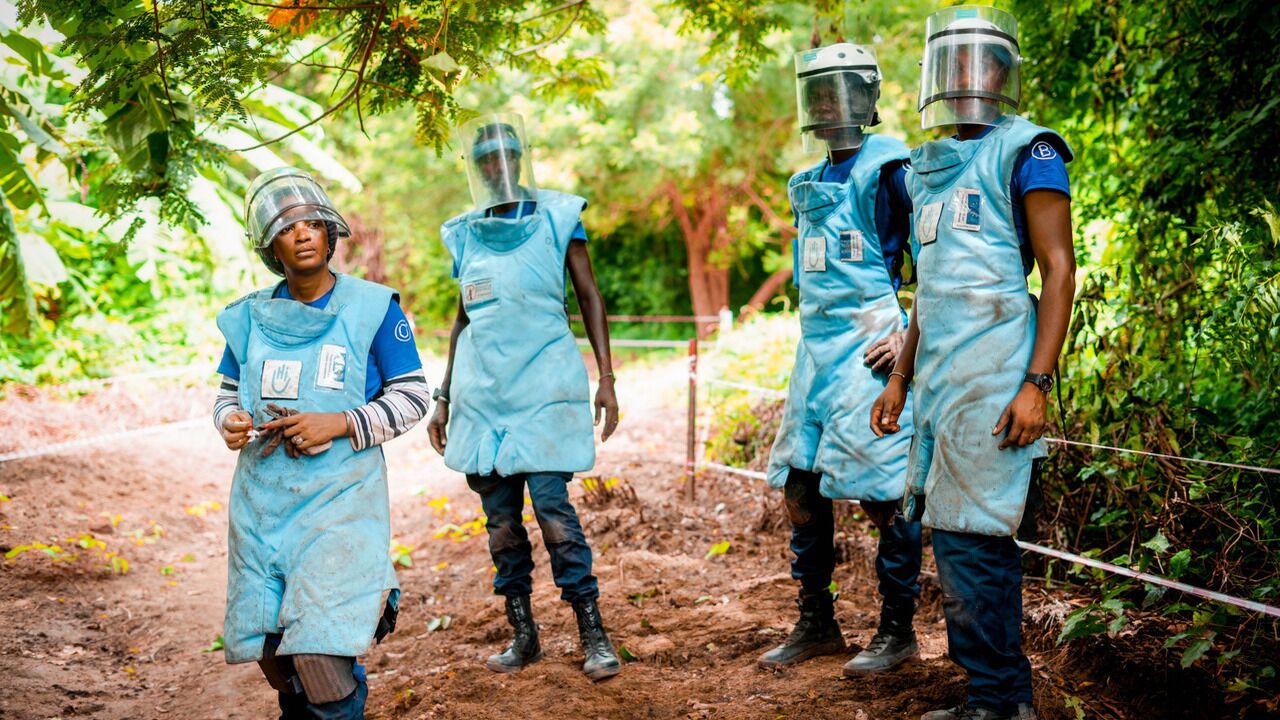
Manual demining team: Maïbata Sané, Idrissa Manga, Pierre Marie Badji and Moussa Traoré. | © A. Faye / HI
Actions in process
In Senegal, HI supports training and the professional and socio-economic integration of people with disabilities. The organisation carries out initiatives within the framework of inclusive education, working with schools and civil society organisations to improve the inclusivity of teaching practices and ensure that disability is taken into account in teacher training. HI also promotes economic inclusion to increase opportunities for learning and skills development, thereby encouraging the integration and success of people with disabilities, particularly young people and women. HI also raises awareness among various stakeholders in the professional world to sustainably improve the accessibility of services and facilities and make the workplace more inclusive.
The organisation carries out demining and risk education operations to promote the building of lasting peace in Casamance. To this end, HI conducts manual and mechanical demining operations, with the aim of returning land free of explosive ordnance to the population. The organisation also helps to revitalise local economic development by supporting individual and community projects, assists mine victims, and promotes social cohesion initiatives to support the building of lasting peace. On a day-to-day basis, HI works alongside numerous partners – regional and national authorities, communities and civil society organisations.
In the field of health, HI works to ensure access to rights and services relating to sexual and reproductive health, with a particular focus on women and adolescent girls. Inclusive awareness-raising and training activities are therefore carried out alongside civil society organisations to improve access to these rights among marginalised populations.
Finally, HI works to strengthen the protection and promotion of the rights of people with disabilities, with a particular focus on combating violence against women and girls with disabilities. HI supports associations and women with disabilities in leadership roles, to sustainably strengthen their capacity to take action and influence public policy in favour of gender equality.
- Number of HI staff: 58 people
- Number of direct beneficiaries supported by HI in 2025: 39,539 people
- Number of direct beneficiaries supported by HI in 2025: 83,497 people
- Programme launch date: 1995
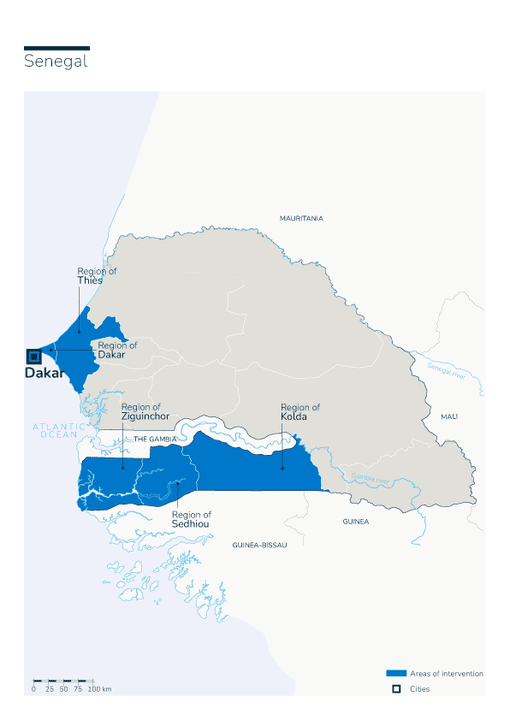
Areas of intervention


concretely
Situation of the country
Senegal, a West African country with a population of over 18 million, is experiencing socio-economic development characterised by both significant progress and persistent challenges. Following strong economic growth in recent years, the country is experiencing sustained growth but must simultaneously contend with high public debt and persistent territorial and social inequalities, particularly between urban and rural areas, and between the northern and southern regions.
The situation in Senegal is characterised by needs linked in particular to natural and climate-related risks. Floods, coastal erosion and desertification affect thousands of people every year, destroying crops, homes and infrastructure.
Furthermore, the peace process in Casamance, although showing clear progress since the signing of historic peace agreements in February 2025 and marked by the gradual return of displaced persons, still requires sustained reconstruction efforts. Demining remains a priority in the country: indeed, more than 1.2 million square metres of land remain contaminated today, hindering the safe return of populations and the economic development of this region, considered ‘the breadbasket of Senegal’.
Furthermore, legislative progress has been made over the last fifteen years to improve the living conditions of people with disabilities. However, many of them still face major challenges regarding inclusion and access to basic services such as healthcare, education and employment. For example, over 60% of children with disabilities are not in school, due to a lack of adapted infrastructure and teacher training.
- Population: 18.5 million
- HDI: 0.530 (2023)
- GDP: USD 32.8 billion (2024)
- GDP per capita: ~USD 1,773 (2024)