

Vadim is receiving rehabilitation treatment from HI’s teams at St Luke’s Hospital in Lviv, Ukraine. | © O. Marikutsa / HI
Vadim agreed to tell his story because he wanted to speak directly to Ruslan, the HI physiotherapist who has been working with him since his operation. "The Boss", as he jokingly calls him.
“Thank God I’m alright! It's thanks to the medical teams. Without them, I wouldn't be here, you know. I'm so grateful to them for saving my life. I'm alive!”
Hidden away in a cellar
It's hard to put into words the hell Vadim experienced. How long did it last? Two weeks, maybe three. An eternity for Vadim. He lived hidden away in the cellar of a theatre in Bakhmut, the site of a deadly battle that lasted for many months. One day, during a lull in the fighting, Vadim went out to buy food. When he returned, his house had been bombed.
Where could he go? A friend advised him to hide in the basement of a building. So, Vadim found shelter in the cellar of one of the city's theatres. In the middle of winter, with no heating or electricity. But because the extreme temperatures, his legs developed severe frostbites.
Amputation
Vadim was finally evacuated from Bakhmut with the help of Ukrainian volunteers. He was rushed to Lviv where he was taken to the Burns Unit of St Luke's hospital, the reference hospital for the most serious cases.
"My legs had turned black. There was no other option. They had to amputate."
Essential rehabilitation for Vadim
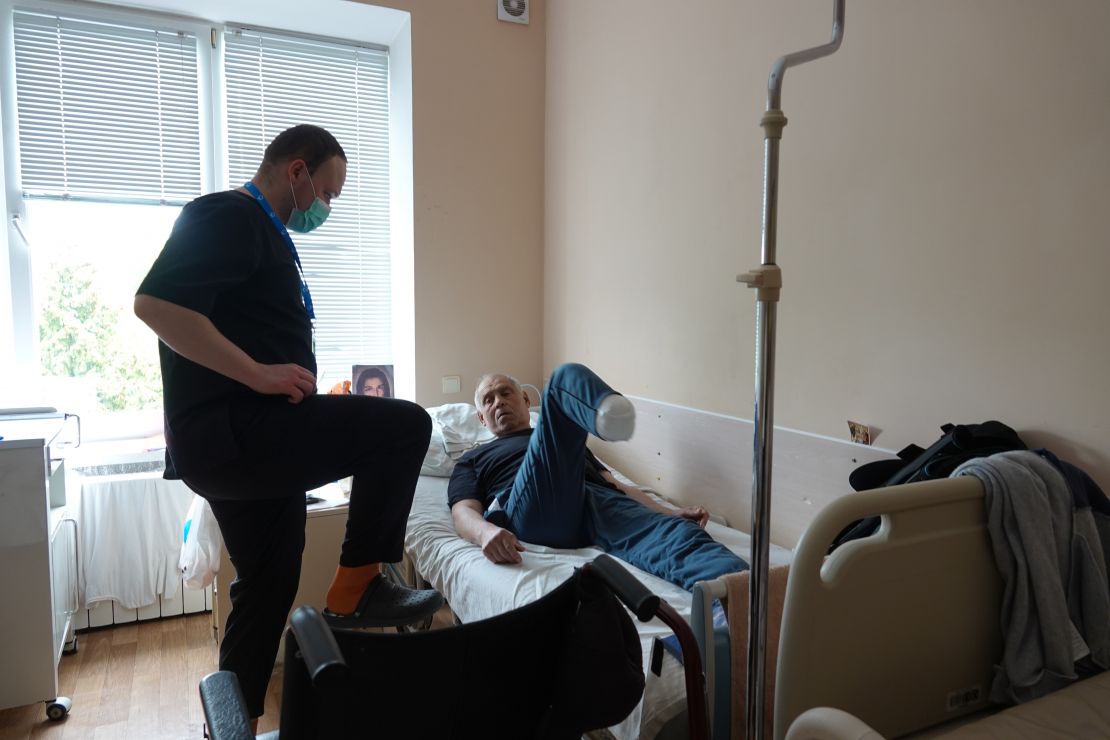 Shortly after his operation, Vadim met Ruslan, one of HI's physiotherapists, who specialises in post-amputation rehabilitation.
"We explain to patients how to take care of themselves in the future, how to do their rehabilitation exercises on their own so they can continue their treatment once they’ve left hospital," explains the health professional.
Vadim has to do a series of exercises to prevent numbness and to work his muscles, so they don’t contract and stiffen.
He doesn’t know how long he’ll be in hospital, or where he will go afterwards.
"Who knows what's going to happen? Nobody... Obviously, I'd like the war to end, but unfortunately I don't think that will happen anytime soon.”
HI supports eight hospitals in the cities of Lviv, Kyiv, Kharkiv and Dnipro.
In Lviv, HI trains national physical therapists to support burns patients, which was not done before in Ukraine. HI also provides direct rehabilitation services at St Luke's hospital, with the support of the European Union and USAID’s Bureau for Humanitarian Assistance.
Like Vadim, many of the injured are displaced people from the East of Ukraine who have been evacuated to Lviv for treatment. In 2022, more than 350 patients with severe burns and complex trauma injuries received specialized rehabilitation services here.
Early close work with rehabilitation team significantly helps the patients to return functionality, to return to their previous daily activities and restore their independence. In addition, physical rehab helps to recover from traumatic experience, to believe in their control over their life and functionality.