

An HI staff providing psychosocial support | © HI
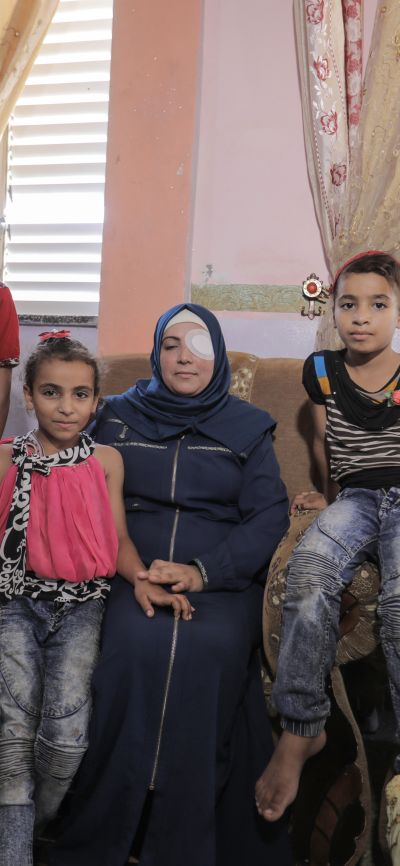
Zena lives in the south of the Gaza Strip, in the governorate of Rafah. Trained in first aid, she was among the first to help the injured when demonstrations began last March. On 18 May, she was assisting three people when a bullet hit her in the face, causing her to lose 70% of her vision. She also fractured her right wrist as she fell.
"I'm not the same person anymore"
A housewife and mother of eight, her injury has had a serious impact on her daily life and welfare. She is now highly sensitive to light and noise - even the television is too loud for her. "I want my sight back,” she says. “I’m a housewife, so it makes life very hard. I shouldn't be exposed to heat, but I have to cook. And I get tired very easily.”
Zena, who has a graduate degree, planned to be a teacher. But the violence in Gaza has cut short her ambitions: "My dream was to be a teacher. Because of what I am and how I look, there’s no way I can do it now. Physical appearance is very important when dealing with children"
HI's support
A few days after her injury, Zena met a mobile HI team who identified her needs. Medics cleaned her eye and she spent eight days in hospital because of her fracture. To make sure she can use her wrist again, HI gave her physiotherapy care, coupled with psychological support. She will need additional surgery to fully restore her sight.
HI’s emergency action in Gaza
HI and its local partners have set up 12 mobile teams. These teams include rehabilitation professionals, psychologists, and social workers. They make home visits to injured people since there is not enough room in hospitals.
In mid-August 2018, the mobile teams conducted an evaluation and began providing services including physiotherapy, post-operative care, psychosocial support, and technical aids to more than 900 injured patients. They hope to help hundreds more in the weeks to come.
The mobile teams were specially trained by HI in 2017 to respond to this type of emergency.
HI also prepared emergency stocks in each governorate, including mobility aids (crutches and wheelchairs), emergency and cooking kits, and information for carers, which has reduced waiting times.